
Release notes
Speconaut v1: the first tool in an API platform
What the first version does, what was tested, and what remains gated.
Read the release notesAPI tools for your application.
Start with source-backed AI. Connect the tools your app needs.
First tool: Speconaut AI Controlled access
# Harbor Scarf

  Material: acrylic
Care: hand washWhat is the Harbor Scarf made of?
The Harbor Scarf is made of acrylic.
Harbor-Scarf.mdCan I machine wash it?
The source says hand wash. It does not confirm that machine washing is safe.
Harbor-Scarf.mdIs the acrylic recycled?
This source does not say whether the acrylic is recycled.
Keep the question in a Missing workflowIllustrative source and response. No live AI request.
Speconaut AI is our first tool: source-backed answers, comparisons, and follow-up context for your application.
Answer from the sources in your store.
Keep a reviewable backlog of knowledge gaps.
Maintain Markdown or JSON source files.
Remove sources only with revision and recovery safeguards.
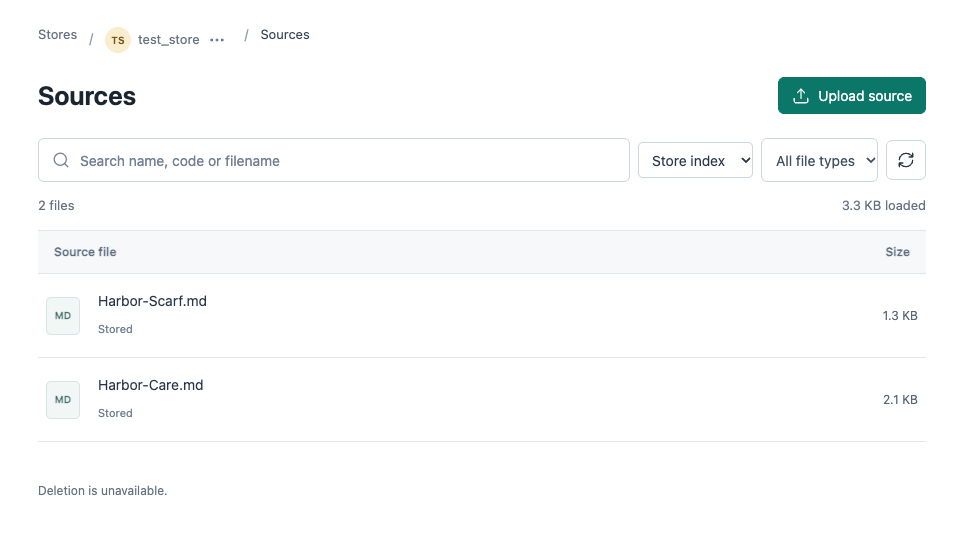
AI v1 core, with controlled access. Source management is an operator preview; production deletion remains gated. Check availability.
Use the API from your application server or a small serverless function. Keep credentials out of public browser code.
Release notes
What the first version does, what was tested, and what remains gated.
Read the release notesIntegration guide
Prepare knowledge, publish it to search, and keep the next question in context.
Read the guideImage, audio, file conversion, and document APIs are the next direction. They are not available in v1.